![Loopfront-1.svg]](https://knowledgebase.loopfront.com/hubfs/Loopfront-1.svg)
The inventory in Loopfront is one of the main sections you see in the menu to the left, and is an overview of all surveyed products and objects of your organization.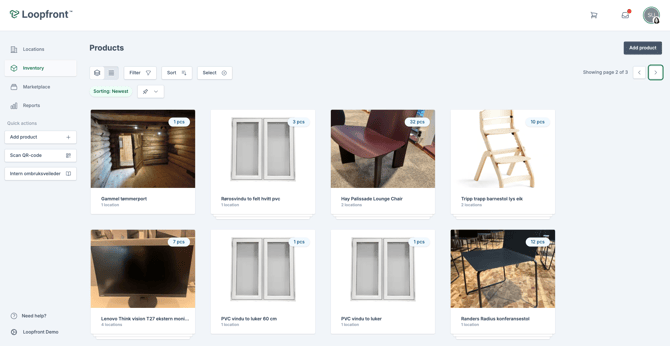
The inventory can be viewed in "products view" (image above) and in an "object list view" (image below). You can switch between these sections by clicking on the button to the left in the top menu.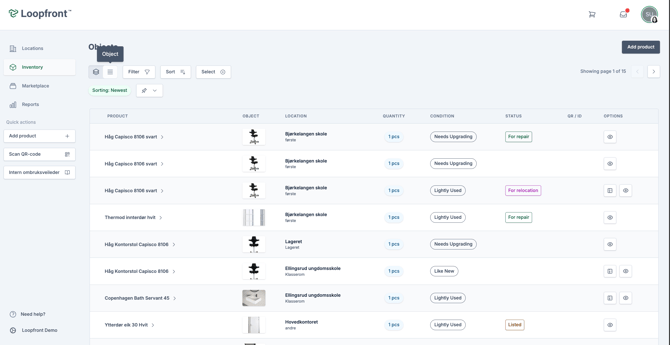
Filter and Sort buttons are always at the top of the page to help you navigate and search effectively:
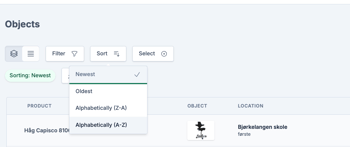
You can sort the inventory by newest, oldest, or alphabetically. When clicking on the "filter"-button, a slide-in menu will appear to the right, where you can select which filters you want to filter the inventory by. You can apply a combination of multiple filters.
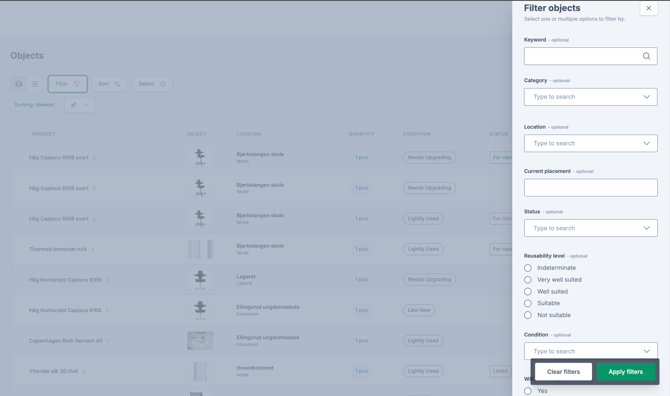
Keyword search
Enter free text to search for matches among the details of the products in your inventory. The platform supports partial word matches.
Data fields covered by the keyword search:
- Title
- Description
- Manufacturer
The platform will remember your filter settings for as long as you stay on the Inventory page, so you can click on listings to read the content and return to find your filter settings intact.
If you leave the Inventory page to go to any other menu page, the Inventory filter selection will automatically get cancelled, unless you save filters (read more here about saving filters).
Click the 'x' to manually cancel all applied filters:

Filtering on missing information
You can filter the inventory by missing information about weight, retail value and carbon footprint to easily update relevant information for savings on the reports page. You can therefore divide the surveying into two phases; basic physical surveying at the location and data enrichment at a later time if those surveying don´t have immediate access to savings data.
As well there is a filtering option for QR-codes to find surveyings lacking one or more QR-codes. This filter allows you to easily relocate items and attach QR-codes to exisiting objects after surveying.